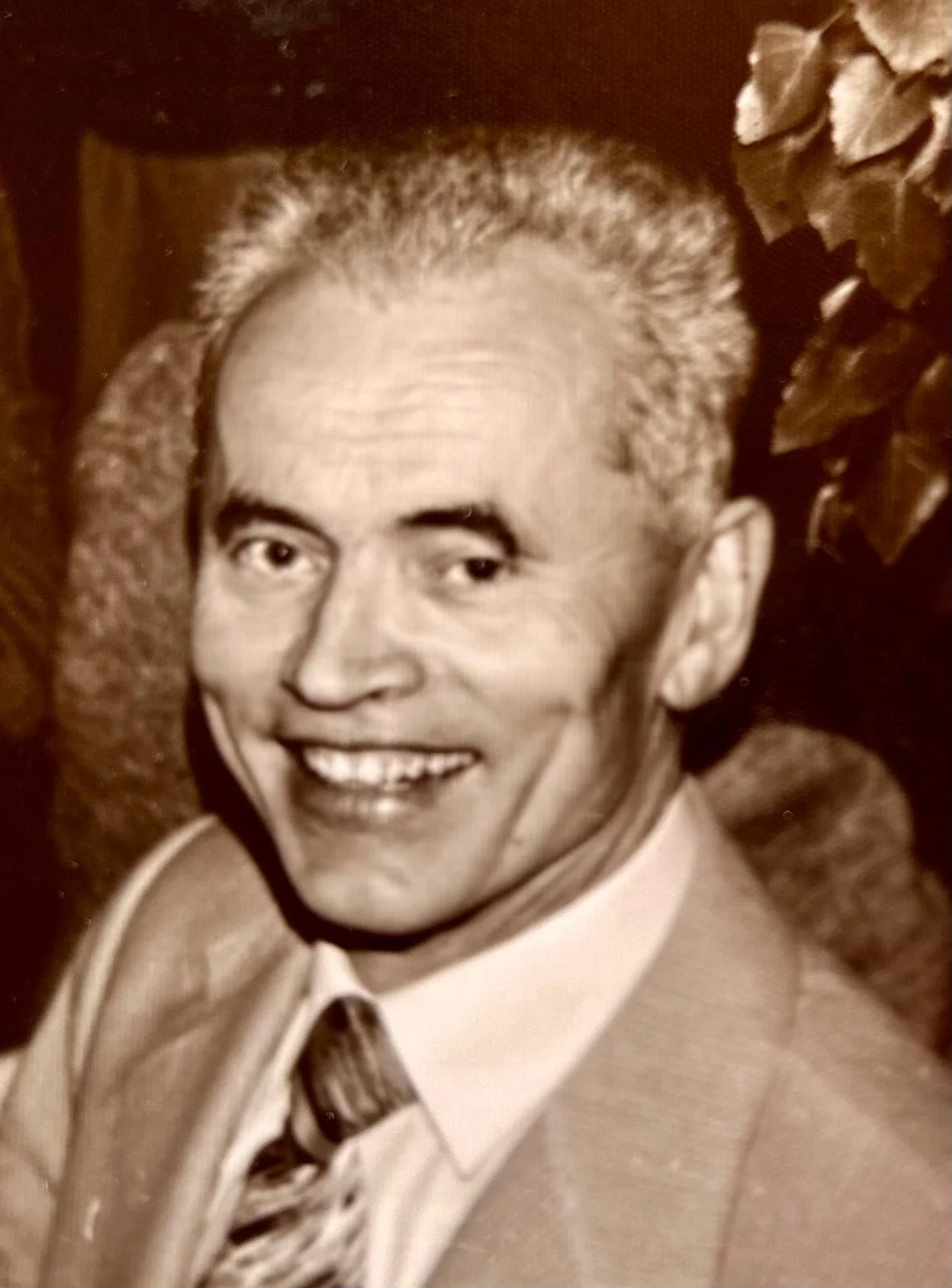
Dad
An attic, a stack of old books, and a conversation with my dad across time.
Where do I even begin?
When I arrived back in London after nearly two months away, I couldn’t stop thinking about my trip home, the place where I was born and grew up. It is the place I once wanted to escape and, in the last few years since my mum died, the place I have slowly been trying to reclaim as home again.
Selling a family home is never easy, especially when you are the one making that decision. It was the house where my siblings and I grew up, the house my parents built from scratch and turned into something beautiful, chaotic and loving. It was always open, always welcoming, always full of people.
Nearly three years after my mum’s death, the house had played its role. It had held my grief, given me solitude and offered comfort. Somehow, like a quiet and loving presence, it gently nudged me forward. I knew it was time.
I went back to Poland for Christmas and decided to stay longer to continue my studies and finally face the difficult decision of putting the house up for sale. There was one thing I had been avoiding all along, and that was the attic.
My dad’s books and papers had been sitting there since he died nearly forty years ago. Boxes of notes, medical textbooks, scribbles and old documents were the last physical traces of him in the house. Clearing them felt like a final goodbye.
It was not a romantic task. It was the middle of winter, minus ten degrees outside, and the attic was just as cold. My breath was visible and my hands were numb as I sorted through what to keep and what to throw away. It felt like a constant negotiation between memory and practicality, between the past and the future.
Then something shifted.
As I opened book after book and envelope after envelope, I began to feel as if my dad was speaking to me through the fragments he had left behind. His handwriting, his notes, his careful thinking felt like breadcrumbs.
The first thing I found was a small piece of paper with his notes from when he was studying medicine in Kraków in midlife, training he needed to complete in order to continue working as a GP. On it, he had written his ten principles for studying well.
I had to laugh. There I was, preparing for my final breathwork exams and studying somatic therapies, hitting a wall with concentration, and my dad from decades earlier was offering me study advice.
His points were simple, practical, and brilliant:
Make a study plan and follow it strictly. Study every day.
Have goodwill toward learning. Want to learn and believe you can.
Focus your attention and take a lively interest in the material.
Understand the content well before memorising it.
Connect new knowledge with what you already know.
Repeat often, and talk about what you are learning with others.
Be critical. Look for causes and effects, and aim for precise truth. If something is unclear or contradicts reason, stay with it longer.
Apply what you learn in practice.
In discussions, be kind, reasonable and composed.
Every greater effort put into preparation brings the greatest mental rewards.
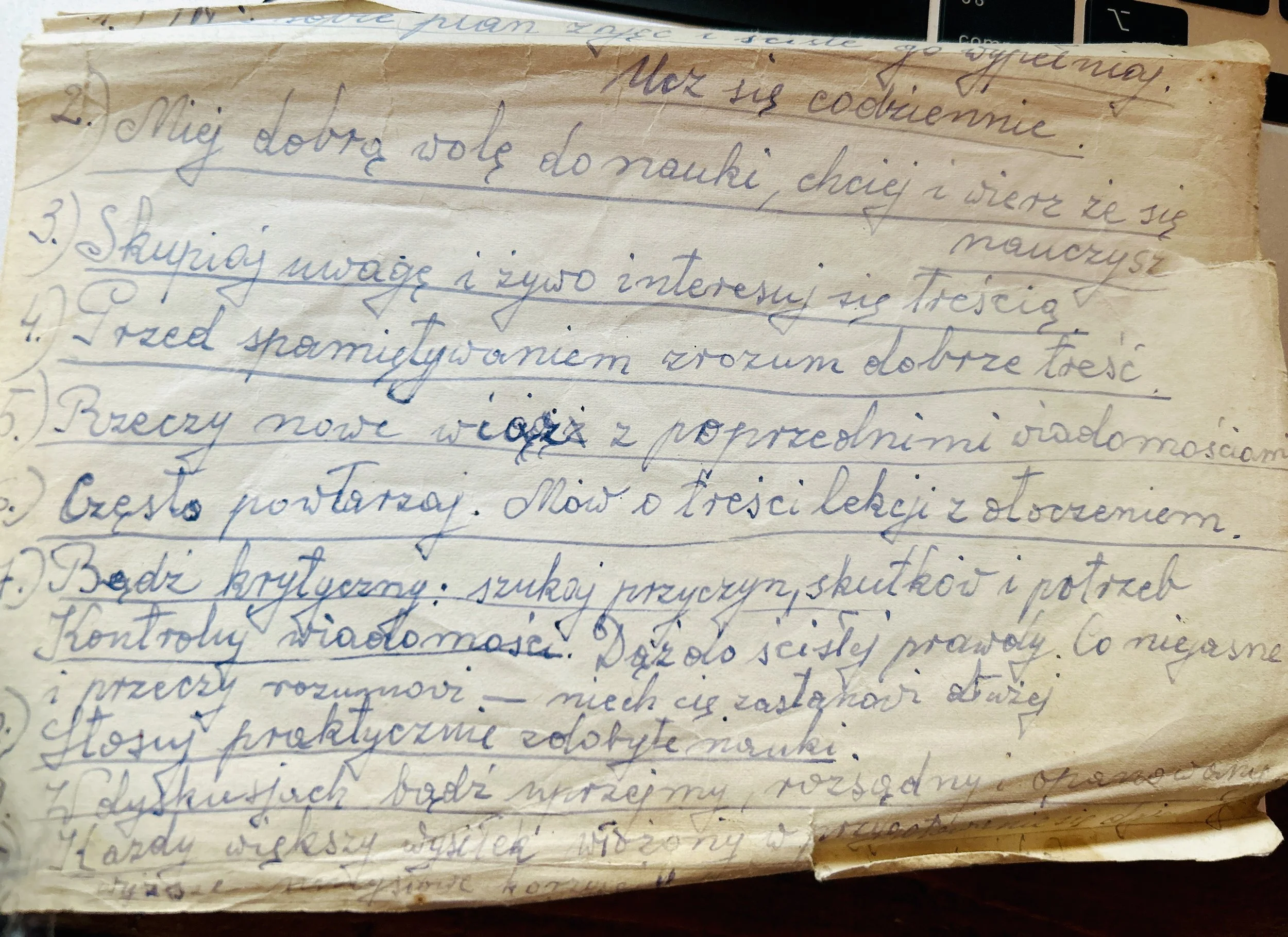
Reading it felt like reading him.
It was such a perfect summary of his mind. He was practical, calm, disciplined and thoughtful. There was no drama in his tone, only the steady instruction to show up, do the work and stay curious.
I lost my dad to cancer when I was eleven. As a little girl, I adored him. When he died, I did not know how to grieve, so I did what many children do and numbed myself. Feeling was too painful and too overwhelming.
What I did not understand then was that grief does not disappear. It waits, and it returns later, often louder than before.
It came back when my mum died, around the same time I lost my job and stepped into midlife. Grief, redundancy and identity shift arrived together, and no one really prepares you for that.
As a child, I saw my dad simply as a doctor. Now I see the full story.
He was born in 1930, the son of farmers, to a Ukrainian mother and Polish father in the south east of Poland. My grandmother, also called Kasia, had to let go of her Ukrainian identity in order to keep the family safe during rising tensions between communities during and after the war.
For my dad, education was not optional. It was survival and possibility. The war interrupted his schooling, yet he returned to education as an adult. He studied at night, served in the army, trained in medical school and later continued studying again. Nothing was handed to him. Everything was earned step by step.
Reading his old CV in his careful handwriting made me realise how much I had taken education for granted. For him, learning was a doorway and a way out, while for me it had simply always been available until I found myself decades later sitting on a freezing attic floor, studying again, starting over and building something new.
The details are different and the times have changed, but the instinct feels the same. He studied medicine and I work with breath and the body, yet underneath it all we share the same curiosity, the same love of learning, and the same desire to understand how to live a good life.
As the hours passed, the attic began to feel less like a chore and more like a revelation. Hidden inside the dust and clutter were small gold mines that revealed who my father really was.
There were medical textbooks on chemistry, biology and anatomy, but there were also engineering manuals explaining how televisions and radios were built. He had once dreamed of becoming an engineer and was fascinated by how systems worked and how things were made.
There were shelves on religion. He was a devoted Catholic, yet he read widely about other faiths and cultures. His curiosity was not confined by belief.
Then there were the books that truly surprised me. Texts on herbalism and living well, early writing on what we would now call holistic medicine, reflections on the vagus nerve and nervous system regulation. I even found magazines on breathwork and rebirthing, references to Leonard Orr, and books on Zen Buddhism.
Sitting there in that freezing attic, I felt something quietly click into place. Medicine, engineering, faith, holistic healing and breath were not separate interests but expressions of the same curiosity.
In that moment, I realised I had not chosen a completely different path from him. In my own way, I was continuing it.
Perhaps this is what inheritance really looks like. Not property or land, but mindset, curiosity and resilience, and the quiet belief that it is never too late to begin again.
There is another part of this story that happened months earlier, long before the attic.
Last October, during an ayahuasca ceremony in Spain, I experienced something that I have only ever shared with a few close friends and family. At the time, I did not try to interpret it or give it meaning. It felt private and tender.
As the song Illuminar by Poranguí was playing, something softened in me completely. I felt my dad’s presence, not as a memory or image but as a sensation. It was a feeling of pure, unconditional love, as if it were being poured over me.
There were no words, no messages and no visions. For the first time since he died, there was no ache attached to him and no sense of longing. I did not feel like a child missing her father. I felt held, safe, seen and loved.
I carried that moment quietly with me without fully understanding it.
Only later, sitting in the attic surrounded by his books and notes, did I begin to see the thread between the two experiences. The ceremony had not brought him back; it had softened me enough to feel him. The attic was not about reviving the past or living in memory. It was about honouring my heritage, my upbringing and the resilience that runs through my family, and acknowledging what continues through me in the life I live now.
This is my homage to my dad, to the person I am still rediscovering nearly forty years after he died, and to the parts of him that quietly live on in me.
I used to think that when someone dies, you lose them slowly, piece by piece, as the memories fade. Now I see something else. Even when the person is no longer physically here, they continue through you in quieter ways, in your curiosity, in what you choose to learn, in what you care about, and in the way you move through the world.
My dad is no longer somewhere behind me. He is simply part of who I am becoming.