
How I Work
Why it works
For many people, the nervous system has been living in a low-level state of alert for years: braced even when there is no immediate danger, with too little time in the rest and repair state where recovery can happen.
Breathwork and bodywork work with that system directly. Changing the way you breathe and bringing attention to physical sensation can help the body register more safety. The breath may soften, muscles may release, and the system may begin to settle. This cannot be forced. As the body feels safer, your capacity can grow: the ability to stay present with what you are feeling without becoming overwhelmed or shutting down.
This work is not about fixing yourself. It is about rebuilding trust with your body and learning to listen to its signals.

Breathwork and bodywork, paced by your body
Not every body needs the same thing, and almost nobody needs everything at once.
So we begin by finding out where you actually are, rather than where you think you should be. From there, the work follows a clear arc:
First, restoration. Reducing what is being carried and giving the system space to rest, recover and soften.
Then, regulation. Building a slower, more organised rhythm in the breath and in the nervous system underneath it. This is where reactivity can begin to loosen its grip.
Then, resilience. Once there is more steadiness, we gently explore challenge and change, so that life’s demands can begin to land differently.
Deeper hands-on somatic work sits towards the end of that arc, not the beginning. It is something we work towards when your body is genuinely ready to meet it.
That is the difference between being moved and being overwhelmed.
This is the path my eight-week programme follows. Read about the Return to Self Programme
What a session is actually like
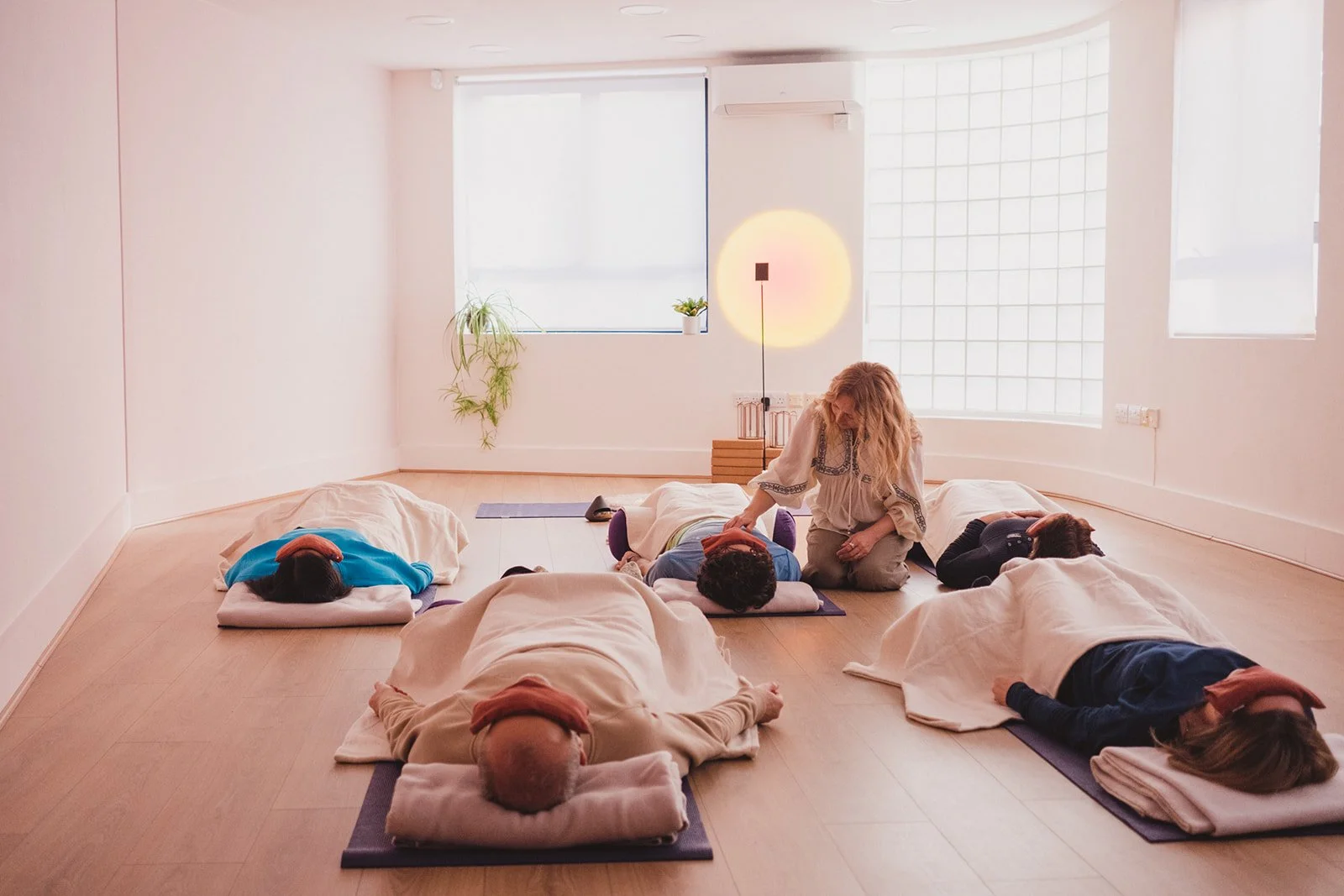
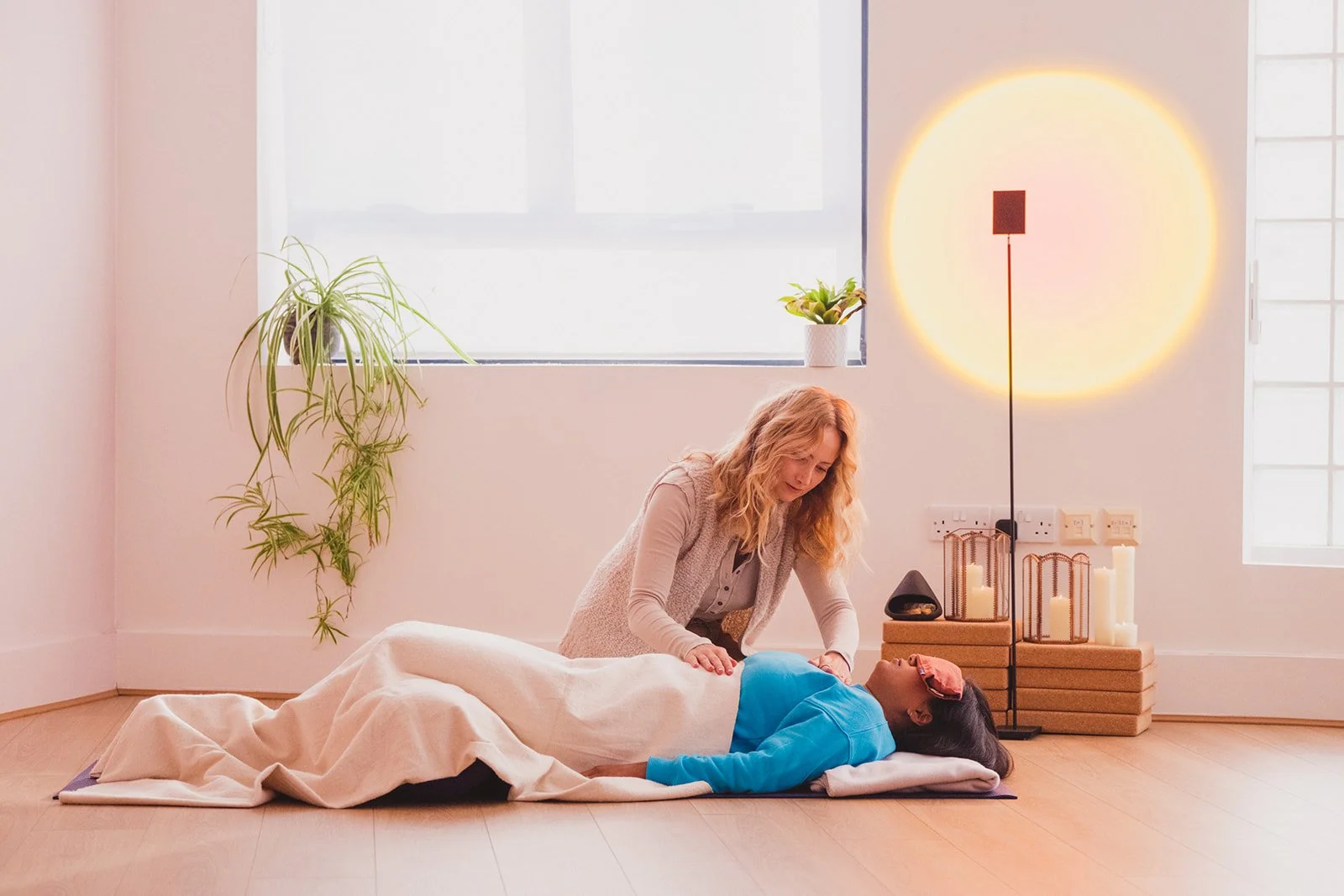
We meet in a studio in Muswell Hill, online or, when appropriate, in nature. You wear whatever is comfortable. Most of the work happens seated or lying down, with blankets and cushions rather than anything resembling equipment.
We always talk first. Then I guide the breath, and you follow at your own pace. There is no performance to achieve. Some sessions involve gentle movement, tapping or somatic practices. Nothing is forced, nothing is sudden, and you can pause or stop at any point, for any reason, without explaining yourself.
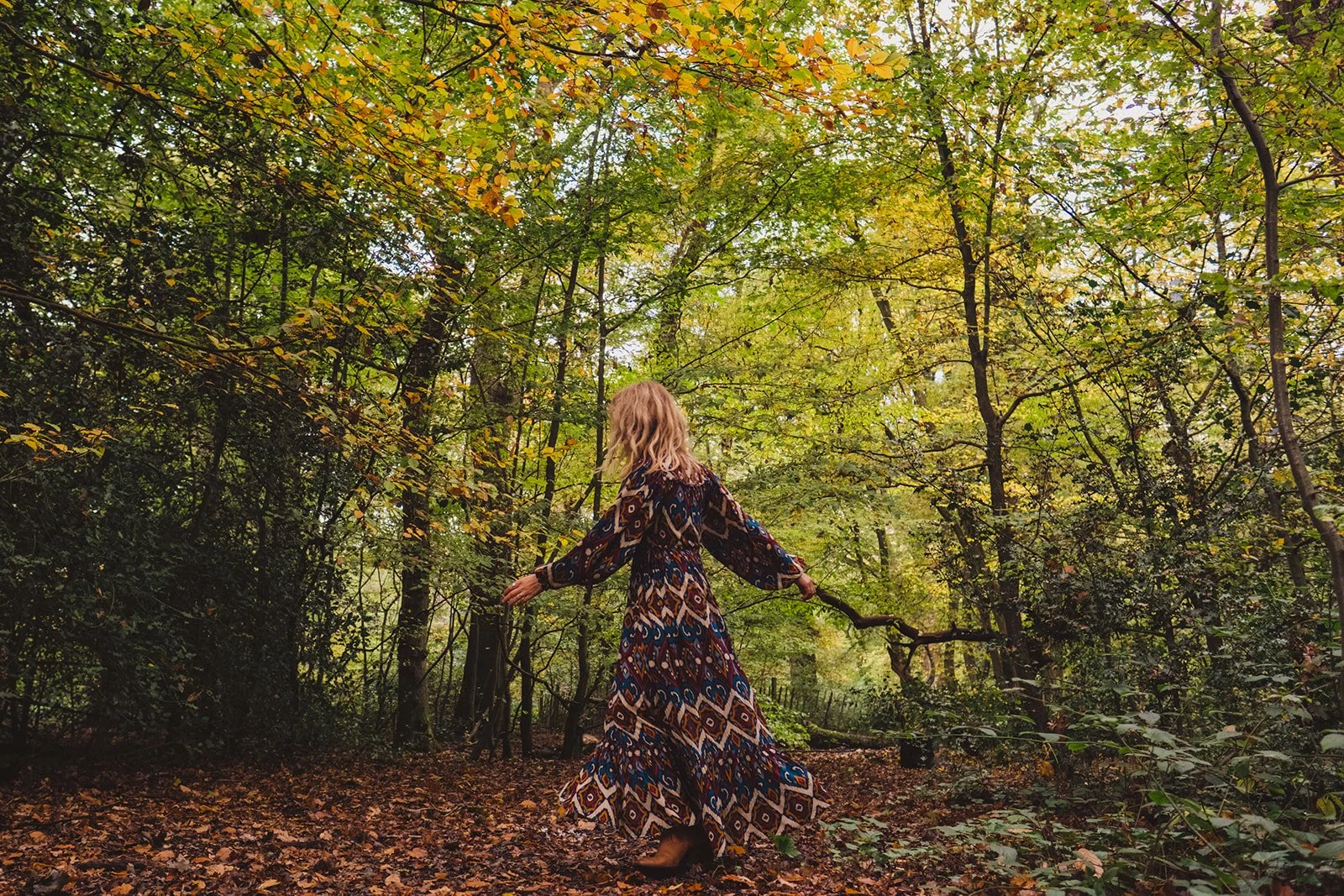
Further along the arc, when we are building capacity, a session can be a walking session in Highgate Wood. The breath is explored in movement, with breath holds only where appropriate and agreed. The wood becomes part of the practice.
Where hands-on bodywork is part of a session, it is discussed and agreed before anything happens, every time. You can also change your mind during the session. Your body is allowed to do that.
We finish by talking again, so you leave feeling settled enough to continue with your day.
What to expect, honestly
You may notice something shift within the first few weeks: sleep becoming a little easier, or a little more space around difficult feelings. The deeper change, meeting life differently rather than simply recovering from it, is slower. That is what the full eight weeks is for.
Some sessions will feel significant. Others will feel like very little happened. Both are part of the work. The nervous system does not change on demand. It changes as a greater sense of safety is built over time.

Safety, and the judgement to do less
Breath is powerful, which is why this work stays within what your system can use. If less is needed, less is what we do. The pace and intensity are always adjusted to you.
On the exploration call, we will talk about anything in your health picture that may change how we work together. Breathwork has genuine contraindications, and I would rather name that plainly than pretend otherwise.
Who this work is not for
If you are in acute crisis, or what you need is clinical care for your mind or body, this work is not a substitute. I will say so and, where I can, help you find the right support.
If you are looking for one big cathartic blowout, I am probably not your practitioner. That approach has its devotees, but it is not how I work with tired systems.
The next step
If this way of working sounds like what you have been looking for, or you are simply curious, it starts with a conversation.